Showing posts with label Air quality. Show all posts

September 28, 2010

Essential Oils and Methane Production


Oregano
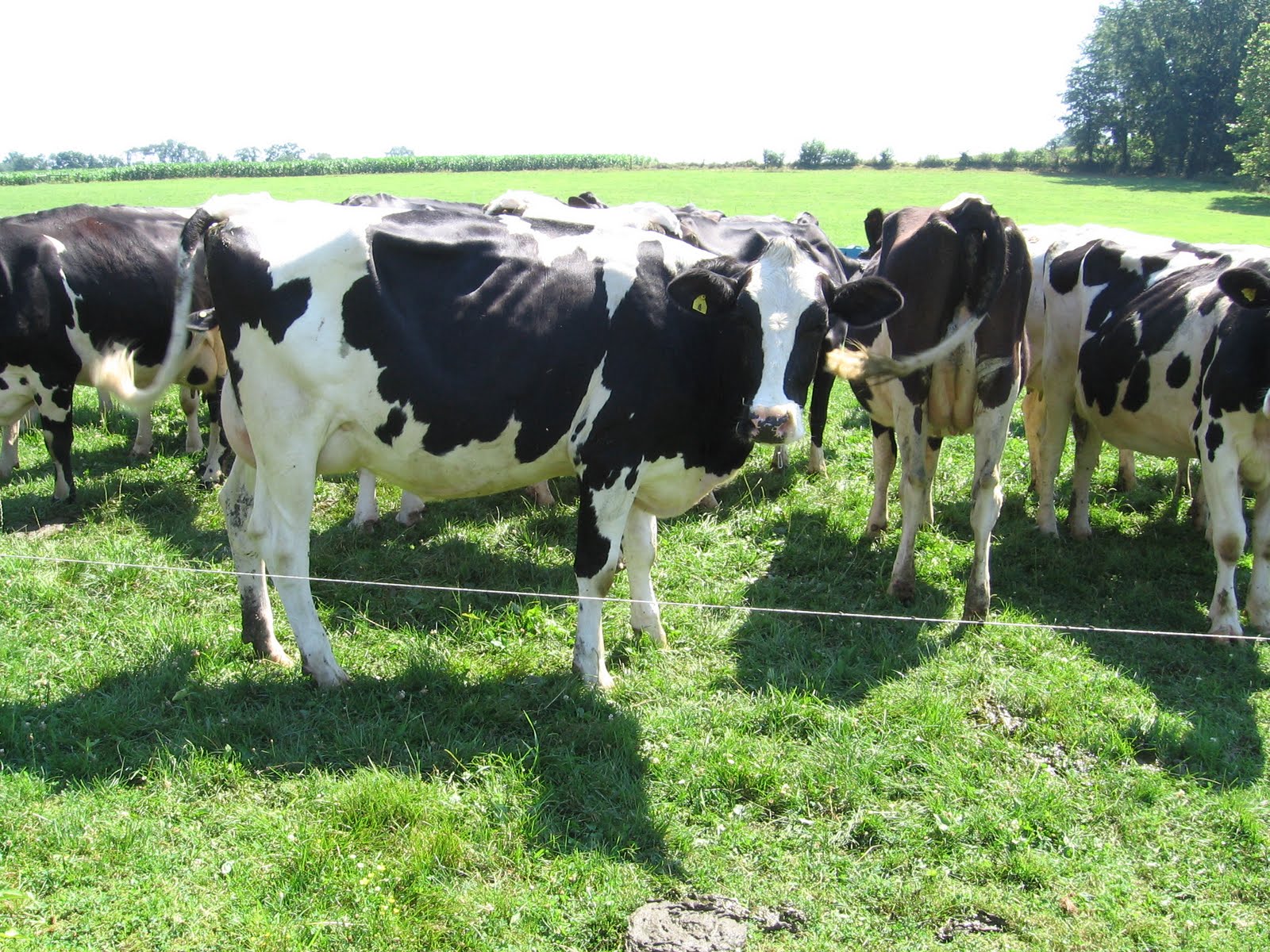
Cow belches release methane into the air, which leads to air quality concerns since methane is considered a greenhouse gas.  Ionophores, like Monensin, have been used to alter the rumen fermentation and reduce methane production along with providing other benefits.  However, ionophores have been banned in Europe and who knows what the future is for these products in the US.  Therefore, researches have tried to find naturally occurring substances that could have the same effect as ionophores.

Like ionophores, essential oils alter the rumen fermentation of feeds by changing the populations of the different kinds of rumen bacteria.  They essentially act like antibiotics in the rumen and kill certain kinds of bacteria.  In the rumen, there are numerous different kinds of bacteria and if one is inhibited another one will flourish.  Since different kinds of bacteria produce different end products (volatile fatty acids, methane, ammonia, etc.) from their fermentation changing the populations will change what is produced from the overall rumen fermentation process.   

Some of the common essential oils that have been studied so far are garlic oil, cinnamaldehyde (from cinnamon oil), eugenol (from clove bud), capsaicin (from hot peppers), and anise oil.  All of these oils have been shown to reduce methane production, modify protein degradation, and increase propionate production in the rumen.  Propionate is the main energy source for milk production so one benefit to feeding essential oils could be increased milk production.  Modification of protein degradation could reduce the amount of ammonia produced in the rumen.  Ammonia produced in the rumen is converted to urea in the blood, is excreted in the milk and urine, and is the main source of excess nitrogen in manure.  Therefore, reducing ammonia production could have both air and water quality benefits.  Reducing methane production would have direct positive impacts on air quality since it would result in less methane being belched out.

Researchers at Penn State have also waded into the area of study and have looked at oregano as a feed additive to reduce methane production.  Dr. Alex Hristov is the main investigator and he began this work by evaluating different supplements in the lab.  He then moved his research to animal studies and found that feeding oregano reduced methane production in dairy cows by 40% and increased milk production by 3 lbs/day.  Because methane production represents an energy loss to the animal it is not surprising that reducing methane production would also lead to an increase in milk production.  The future of this work is to determine what specific compound in the oregano is actually eliciting the response.  Determining the basic compound is essential to get this type of research out onto the farm because basic compounds are easier to make consistently and would be cheaper for farmers to buy.

Although many of these products show promise, how well they work and if they alter the rumen fermentation in a positive manner is highly variable.  These products work on a broad range of rumen bacteria so truly manipulating rumen fermentation on a fine scale will be difficult.  Also, essential oils are very pH dependent meaning that they work differently at low versus high pH.  Therefore, the type of animal and diet fed to that animal will greatly impact how well essential oils reduce methane production.  What dose to feed, how to incorporate into rations, and what combination of oils is the best are all things that are yet to be determined. 

September 14, 2010

Tracking MUNs to Limit Ammonia Emissions

Milk urea nitrogen (MUN) is an affective and easy tool for farmers to track how well their cows are utilizing nitrogen from the feed, but it can also be a tool to evaluate air quality on farms. 

Milk urea nitrogen on well managed farms ranges from 8 mg/dl up to 12 mg/dl.  Values higher than 12 indicates that there is nitrogen being wasted and the ration formulation needs to be evaluated.  There are two things that should be looked at in the ration when MUNs are running high.  The first is the amount of protein in the ration.  If the cow is fed more protein than she needs that protein will first be converted to ammonia in the rumen.  Ammonia is then absorbed into the blood stream where it is converted to urea due to the toxicity of ammonia to the cow.  Much of this urea is then excreted as a waste product in the urine, but some will also go into the milk.  Therefore, MUN is a good indicator of how much urea is excreted in the urine.  The other thing to look at in the ration is the amount of available energy.  If there isn't enough energy for the level of protein the protein will be broken down without subsequent microbial protein production and ammonia will be formed.
From a farmer perspective high MUNs indicate that money is being wasted on protein that is not being used for milk production.  From an environmental perspective urea that is excreted in the urine is quickly converted back to ammonia by the urease enzyme found in the feces.  This ammonia creates air quality concerns for the farm and the surrounding area.  It is estimated that 25% of the nitrogen that ends up in the Chesapeake Bay comes from the air as ammonia. 

August 30, 2010

Protein Utilization on Pasture

Although we tend to worry about cows getting too much protein from the pasture during the lush spring months, the fall bump can also lead to too much protein intake on pasture. Good quality pastures tend to provide more protein than energy in general, but during the spring and fall growing seasons that ratio tilts even further towards protein. Therefore, supplementing either grain, corn silage, or a total mixed ration (TMR) is usually necessary to improve production in grazing herds and increase the utilization of protein from the pasture.

The energy component of the diet can greatly influence how the protein from the pasture is digested. This is because when a cow eats she is not only eating to support her own needs, but also the needs of the microbes in her rumen. When there is energy and protein available at the same time these microbes break down the feed (energy and protein) and use the end products to produce more of themselves (microbial protein). They then pass out of the rumen serving as a protein source for the cow. However, if there isn’t enough energy available, as is the case on pasture, the protein in the pasture will still be broken down, but instead of being converted to microbial protein, feed protein is broken down to ammonia. Ammonia is absorbed into the blood where it is converted to urea. This urea in the blood is the source of milk urea nitrogen (MUN) and urea nitrogen in the urine. Since MUN is coming from the same blood urea nitrogen pool as urea in the urine it is a good indicator of urea excretion and utilization. Excessive urea production and excretion in urine can lead to water and air quality concerns.

Also, from the cow’s standpoint, the production and excretion of excess urea takes energy. There is a paper out of Penn State by Kolver and Muller that estimated excess urea excretion cost the cow almost 4 lbs of milk/day! This is because it takes energy for the cow to convert the absorbed ammonia, which came from excess protein supply in the rumen, to urea. Ammonia is toxic to the cow so this conversion to urea is a necessary energy utilizing process, which cannot be eliminated, but can be reduced through lower protein rations and appropriately matching ration protein and energy concentrations. Are you willing to leave 4 lbs of milk on the table knowing that not only did you lose milk production, but you also lost feed efficiency and it could have been prevented if MUN had been tracked and maintained within the recommended 8-12 mg/dl?

One way to improve nitrogen efficiency from the pasture and decrease MUN is to supplement the pasture with a partial TMR. A study from Penn State supplemented pasture with a partial TMR and saw an 8 lb/day increase in milk production and a 3 mg/dl decrease in MUN compared with pasture supplemented with 19 lb of concentrate. Supplementing with a grain mix or corn silage are also options, but a mixture is usually better at providing digestible energy that is not too fermentable in the rumen.

Although the pasture may be supplying a large portion of the dry matter, supplementing the pasture is necessary to maximize its full potential. Total mixed ration supplementation of pasture allows for better capture of protein from the pasture the nitrogen utilization will be increased, which can be tracked though MUN values. For all the effort that goes into developing and maintaining high quality pastures lets be sure we are getting all we can out of these efforts.

August 20, 2010

Getting a Farmer's Attention


Many nutrient management, water quality, and general environmentally minded folks get frustrated at times that farmers aren’t as engaged in these issues as they would like or don’t implement changes on the farm at the pace they would like.  Why is that?  Well, it boils down to what is your priority.  If you work in the environmental field and live and breathe water quality and air quality all day you begin to believe that it is the most important thing, which rightly you should.  If environmental quality is your field it makes sense that air and water quality are top priorities for you and you may tend to assume that they should be for others. 
Farmers, on the other hand, do care about water and air quality and other environmental concerns, but that is not their entire job so it is not their priority issue.  Farmers actually have very complicated jobs with a lot of things pulling them in many different directions.  Farmers are raising, large numbers of animals.  Even a 40-cow dairy, which is small in the dairy world, is a daunting task when you think about actually taking care of 40 animals plus the 20 calves and heifers that would also be on that farm.  I work in the dairy industry and I know I would be overwhelmed with all they have to deal with.  Cows get sick and need to be treated, maybe they need help calving, they need extra care and attention after calving even if everything went well, they need to be fed multiple times a day, they need to have access to water, they need to be milked at least twice a day, their housing and stalls need to be maintained daily so that they are comfortable, and the list could go on and on.
 Just dealing with the needs of the cows is a lot of work, but farmers also need to provide food for these animals, and in many cases that means growing the corn, soybeans, and hay that will be fed to the cows.  Good quality feed is necessary to have high levels of milk production, which is necessary for a farm to make money and continue in the business.  That means fields need to be planted and fertilized in a timely manner, hay needs to be chopped multiple times throughout the year and timed so that it has time to dry before getting rained on, and crops need to be harvested a precise times and stored properly  so that there is little loss of this precious feed through the year.
All of these animal care and feed production activities take a lot of time and deserve the attention of the farmer.  These are, and should be, their priorities if they want to remain in the dairy business.  Although many farmers do care a great deal about the environment it just doesn’t make it to the top of the priority list very often.  Therefore, for someone working in the environmental field to gain the attention of the farmer and get them to really implement a strategy on their farm you need to show them how it will impact their bottom line and/or improve the health of their animals or the quality of the feeds they are growing.  If it doesn’t benefit the dairy operation in some way it will never reach the top of the priority list even though it is on the list.   

August 11, 2010

eXtension - A Great Resource

eXtension is a website that was developed within the last 5 years and is turning into a great resources on a number of issues.  All the material on the website is peer reviewed and comes from reputable research institutions and extension professionals so it can be trusted.  It has information on the following general topic areas:
  • Community - master gardening and entrepreneurship
  • Disaster Issues - floods, oil spill, wildfires, and agrosecurity
  • Energy - farm and home 
  • Family - child care, food and fitness, care giving, food safety, parenting, and personal finance
  • Farm - manure management, bee health, beef cattle, dairy cattle, corn and soybean production, cotton, goats,  horses, organic, and small meat processors
  • Pest Management 
  • Youth   
Hidden under the "manure management" sub-section of the "Farm" tab is a great page on environmental regulations related to livestock and poultry operations.  This explains both water and air quality regulations that are enforced at the national level.  There are many state and local regulations that farmers will also need to follow which aren't discussed on this page, but it is still a great resource for the national laws.  On other pages is a dearth of information on environmental tools and management strategies that can be employed on varies types of farms.

June 4, 2010

4%, Dairy's Contribution to Green House Gasses

In a 2006 report the U.N. Food and Agriculture Organization (FAO) released a report stating that livestock accounted for 18% of all green house gas (GHG) production world wide. This initial report implied that livestock contributed more to GHGs than transportation. Since that report Frank Mitleohner, with the University of California-Davis, clearly pointed out a flaw in how this value was calculated. The livestock GHG production values looked at the entire picture from the fossil fuel used to power the machines to plant the crops that were used to feed the animals, to the GHG produced by the animal, and to the processing of those animals. However, on the transportation side only the GHGs produced through the actual use of the vehicles were included in the calculation. Mitleohner received numerous threats for questioning this report, but he has since been vindicated. The new FAO report and those calculates that dairies contribution to GHG is only 4%. In addition, American dairy farms emit 45% fewer GHG per unit of milk compared with the global average. This is positive news for the dairy industry and hopefully this information gets quoted as much as the previous data was.

In the future the U.S. dairy industry as pledged to reduce GHG by another 25% by 2020. Dairy and the livestock industry tend to get blamed for a lot of things, but they have consistently addressed shortcomings in the industry, improved production efficiency, and reduced environmental impact over the years. How many other industries can claim this type of progress?

March 19, 2010

Farmers Helping the Environment

I've been to a number of meetings the past few months and heard farmers complaining about why they are always blamed for nutrient pollution of local watersheds and the Chesapeake Bay.  Granted, agriculture does still contribute a large percentage of nutrients to the Chesapeake Bay and local watersheds, but progress has been made.  In Pennsylvania, agriculture has reached over 40% of the nitrogen reduction goal and 30% of the phosphorus reduction goal!  This did not just happen, farmers made it happen through hard work and continuing to try to make their farms better. 

I see farmers doing the right thing for the environment all the time.  Just in the past few weeks I have received phone calls from producers trying to figure out the best way to reduce odor on the farm, compost manure to reduce the risk of nitrogen leaching, upgrade manure digesters, and to install solar power.  All of these farmers are considering making significant investments purely for the sake of doing the right thing for the environment and their neighbors.  How many of the rest of us can say that we have made the same level of investment in our own homes and lives to reduce our impact on the environment?  Farmers really are the original stewards of the land and deserve our respect and appreciation for their efforts. 

December 21, 2009

Dairy to Reduce Green House Gases

About a week ago the headlines stated that the U.S. dairy industry agreed to reduce greenhouse gas emissions by 25% before 2020.  This reduction is estimated to come from expanding the use of methane digesters on dairy farms.  Methane digesters are a technology that is currently in use on about 2% of U.S. dairies, and allows for production of energy from the digestion of manure.  It is estimated that one 700-cow dairy herd can power 200 homes with electricity.


This is a lofty goal and there are a lot of questions that need to be answered on this front.  For one, there is not good data on green house gas emissions from dairy farms because there are a  number of factors from the diet to facilities that can impact green house gas loss from the farm.  The other issue with betting all of these green house gas emissions reductions on this technology is that installing a methane digester on a farm can be pretty expensive, and, to date, has only been feasible on larger dairy farms.  There is technology out there for use on small farms, but it is not widespread at this point. 

I don't want to sound too down on this goal as it would be great if the dairy industry reached it.  However, I'm a little concerned about how many dairy farmers out there know what they have been volunteered for, and I have concerns about whether the technology has come down in price enough for small farms.

Although we are still working on water quality concerns associated with agriculture, the powers that be are shifting the attention to the next frontier, air quality, and we need to be addressing this as much as possible. 

December 3, 2009

Swine and Poultry and Air Quality


I realized my dairy bias is really showing through in this blog so in an effort to try to expand my horizons I found a nice article on air quality concerns related to swine and poultry. This is another article from the Manure Du Jour series hosted last year. Another series of Manure Du Jour will be starting up again the first of the year so stay tuned for the schedule.


What are the major sources of greenhouse gas from swine and poultry operations?

The majority of methane and nitrous oxide from swine and poultry operations is emitted from buildings, manure storage, and land application of manure.


What strategies are available to reduce greenhouse gas?

A number of the strategies shown below reduce the potential for GHG emissions and in some cases, the amount of manure nutrients.

  • Reducing the amount of waste excreted from the animal decreases the potential for formation of greenhouse gases during manure storage.
  • Healthy herds use feed efficiently, and can reduce nitrogen excretion by ten percent compared to unhealthy herds.
  • Animals with genetic lines predisposed to high feed efficiency also excrete fewer nutrients in urine and feces.
  • Split-sex feeding enables producers to feed each sex closer to its nutritional requirements.
  • Phase feeding allows producers to better match nutrients to the changing growth requirements.
  • Enzymes, such as phytase, improve the digestibility of protein and reduce nitrogen excretion in manure. A low protein diet can reduce both fecal nitrogen and carbon dioxide production.
  • Wet-dry feeders increase efficiency by reducing the amount of feed required to achieve a desired weight gain

What are the EPA reporting requirements for greenhouse gas from animal agriculture?
The Environmental Protection Agency has proposed national reporting of greenhouse gas emissions. Under these reporting requirements, large-, direct emitters of 25,000 metric tons of carbon dioxice equivalents or more must report GHG emissions to the EPA. Only emissions from manure management systems are expected to fall under these reporting requirements.


View the “Air Quality Nutrition and Greenhouse Gases” epi­sode of Manure Du Jour on the Penn State Agriculture and Environment Web site: aec.cas.psu.edu/news/webinar_archives.asp. Special thanks are given to Dr. Wendy Powers, Departments of Animal Science and Biosystems and Agricultural Engineering, Michigan State University, for presenting the information on this topic.